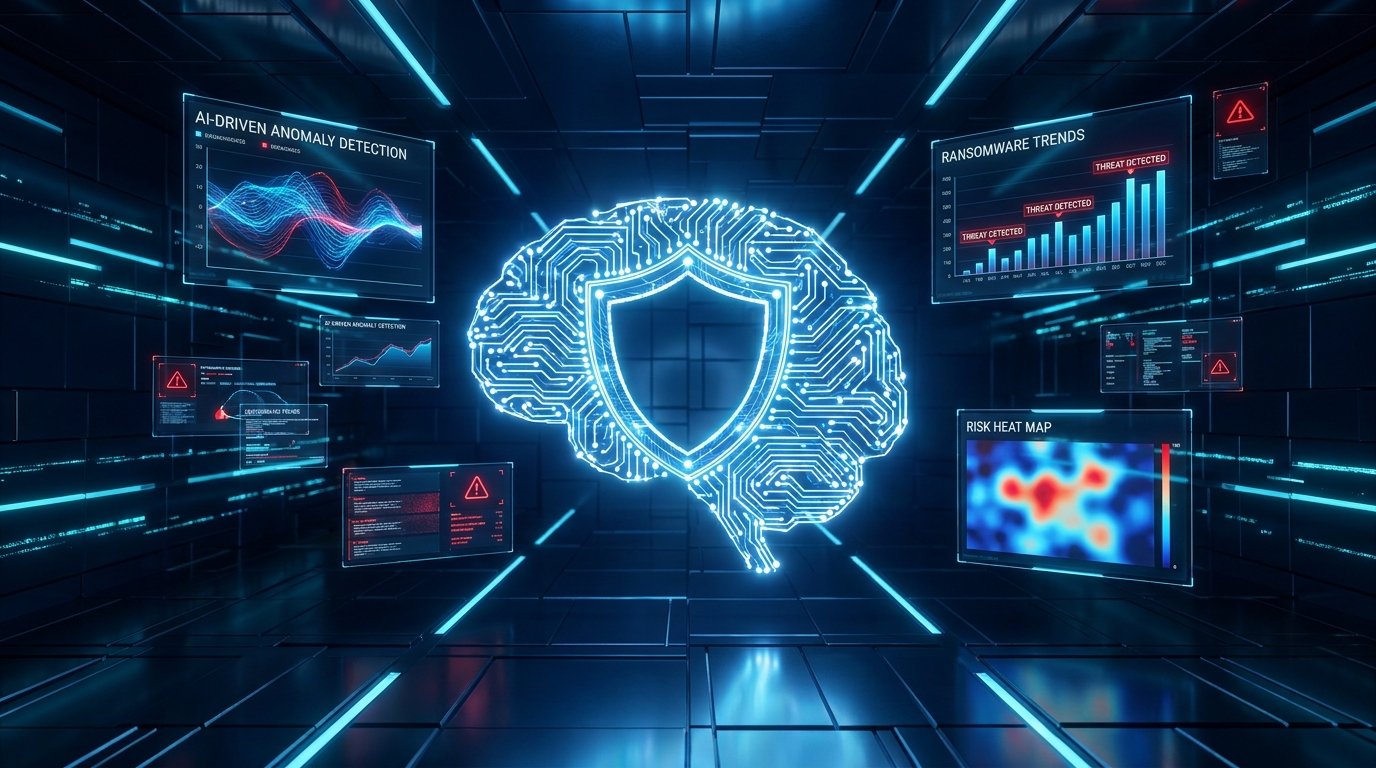
Cybersecurity enters a new era in 2025. AI-powered attacks increases, ransomware targets critical infrastructure, and quantum computing threatens current encryption. Organizations must evolve defenses or face catastrophic breaches. Here's what security leaders need to know.
The Threat Landscape Shifts
AI enables attackers to automate vulnerability discovery, craft convincing phishing, and adapt malware in real-time. Traditional signature-based defenses fail against AI-generated threats. Defense must match offensive sophistication.
Critical 2025 Threats
1. AI-Powered Phishing
Deepfake audio and video make CEO fraud devastatingly effective. AI analyzes social media to personalize attacks. 84% of employees can't identify AI-generated phishing. Security awareness training must evolve.
2. Ransomware 3.0
Double extortion (encrypt + data leak) becomes triple extortion (add DDoS, customer notification). Average ransom hits $2.5M. SMBs increasingly targeted as easier prey with valuable data.
3. Supply Chain Attacks
Attackers compromise vendors to reach targets. SolarWinds-style attacks increases. Third-party risk assessment becomes critical. Zero-trust architecture limits blast radius.
4. IoT Vulnerabilities
50 billion connected devices by 2025, most with weak security. Smart buildings, medical devices, and industrial IoT create massive attack surfaces. Segmentation is essential.
Defense Strategies for 2025
Zero-Trust Architecture
"Never trust, always verify" becomes standard. Micro-segmentation, least-privilege access, continuous authentication. Assume breach, limit lateral movement. 65% of enterprises adopt zero-trust by end of 2025.
AI-Powered Defense
Fight AI with AI. Behavioral analytics detect anomalies. Automated response contains threats in seconds. Predictive models identify vulnerabilities before exploitation. Human analysts focus on strategic threats.
Quantum-Ready Encryption
Quantum computers will break RSA encryption by 2030. Start migrating to post-quantum cryptography now. NIST standards finalized in 2024. Early adopters avoid costly emergency migrations.
Security Culture
Technology alone fails. Build security-first culture. Regular training, phishing simulations, clear reporting processes. Reward security-conscious behavior. Make security everyone's responsibility.
Strengthen Your Security Posture
AIG provides comprehensive cybersecurity assessments, zero-trust implementation, and 24/7 monitoring. Protect your organization before attackers strike.
Schedule Security AuditConclusion
2025 separates security leaders from laggards. AI threats demand AI defenses. Zero-trust is no longer optional. Start your transformation now—before you become a statistic.
Frequently Asked Questions
Get answers to common questions about Cybersecurity & Risk Management
What is zero trust security and why is it important?
Zero trust security assumes no user or system is trustworthy by default, requiring continuous verification for every access request. This approach minimizes breach risk, limits lateral movement, and protects sensitive data in distributed environments.
How often should cybersecurity assessments be performed?
Comprehensive security assessments should occur quarterly, with continuous monitoring in place. Vulnerability scans should run monthly, penetration testing annually, and employee security training ongoing. Immediate assessments are needed after any security incident.
What is SASE and how does it improve security?
SASE (Secure Access Service Edge) combines network security and WAN capabilities in a cloud-native platform. It provides consistent security policies regardless of user location, simplifies management, and scales efficiently for remote workforces.
How can Accurate Information Group improve our cybersecurity?
Organizations should